






Acne Scarring
Acne scarring is a common problem resulting from the healing of acne lesions. It can vary from mild to severe and significantly impact a person’s self-esteem and quality of life. Acne scarring manifests in various forms, from superficial marks to deep pits on the skin’s surface, and occurs when acne lesions heal with fibrous tissue replacing normal skin.
Dermatologist-Led Practice
100,000+ Consultations & Treatments
Key Points
- Acne scarring results from healed acne lesions.
- Scar types include atrophic (boxcar, ice pick, rolling), keloid and hypertrophic, each with unique characteristics.
- Risk factors include severe or prolonged acne, genetic predisposition, and poor acne management.
- Scarring can lead to reduced self-esteem.
- Treatments vary by scar type and individual skin and general health characteristics.
- Multiple sessions are typically required.
- Treatment effectiveness varies and the goal of any treatment is to improve scarring and not ‘remove’ scarring.
What is acne scarring?
Acne scarring refers to the marks or changes in skin texture left behind after acne lesions heal. These scars are the body’s natural response to inflammation and can be permanent. Melbourne skin clinic offering general dermatology services for various skin concerns and treatments.
- Marks or texture changes on skin after acne heals.
- Body's response to inflammation.
- Can be permanent without treatment.
Who gets acne scarring?
Acne scarring commonly affects individuals who have experienced severe or prolonged acne, particularly those with a genetic predisposition or delayed treatment of active acne lesions.
- Common in individuals with severe or prolonged acne.
- Genetic predisposition can play a role.
- Poor acne management increases risk.
Clinical features
Acne scars can present as atrophic (depressed) or hypertrophic (raised) lesions. The most common types include boxcar, ice pick, and rolling scars, each with distinct characteristics.
- Types - atrophic (depressed), keloidal or hypertrophic (raised).
- Common forms - boxcar, ice pick, and rolling scars.
- Each type has unique characteristics.
Impact and complications
Acne scarring can impact mental health, often leading to reduced self-esteem and body image issues. This can result in social anxiety and withdrawal, affecting both personal and professional interactions. The emotional distress can escalate to mental health concerns like depression. Additionally, societal pressures and stigma regarding skin appearance can intensify these psychological challenges.
- May impact self-esteem and body image.
- Can lead to social withdrawal, anxiety, and isolation.
- May escalate to depression and other mental health issues.
- Can affect confidence in professional and personal relationships.
Subtypes and variants
- Boxcar Scars – Wide, U-shaped scars with sharp edges.
- Ice Pick Scars – Narrow, V-shaped scars that go deep into the skin.
- Rolling Scars – Wavy indentations in the skin due to fibrous bands.
Treatment Options for Acne Scarring
The treatment of acne scarring is tailored to the type of scar, with each scar type responding best to specific treatments. While considering treatment options, individual skin type and the potential risk of post-inflammatory hyperpigmentation (PIH), especially in darker skin types is also considered.
Treatment for Different Types of Acne Scars
Ice Pick and Boxcar Scars
- TCA Cross For deep, narrow ice pick scars and some types of boxcar scars. Care should be taken in darker skin types due to PIH risk.
- Laser Resurfacing Useful for more superficial boxcar scars. Options include fractional CO2 or Erbium lasers, which help in skin regeneration. May not be appropriate for darker skin types due to PIH.
Rolling Scars
- Subcision & Fillers Ideal for lifting the depressed areas of rolling scars, providing immediate improvement.
- Microneedling Effective in improving skin texture by stimulating collagen production. Suitable for all skin types.
- RF Microneedling Enhances the benefits of traditional microneedling, particularly effective in treating rolling scars. Care should be taken in darker skin types due to PIH risk.
- CO2 Laser Resurfacing Fractional CO2 laser treatment is beneficial but should be approached cautiously in darker skin types due to the risk of PIH.
Hypertrophic & Keloidal scars
- Cortisone injections – can flatten scars
- Vascular lasers – can reduce redness of scars
Topical Treatments
These include retinoids and alpha hydroxy acids, which can help in mild cases and as adjunct treatments.
Oral Treatments
Isotretinoin and other oral medications may be considered for preventing new scars in some cases.
Other Physical Treatments
Options like medical grade chemical peels may also be effective, depending on the scar type.
The effectiveness of treatments varies, and some scars may be minimised rather than completely removed. Multiple sessions may be required for optimal results.
- Treatment should be tailored to scar type, considering individual skin types.
- TCA Cross and laser resurfacing can be effective for ice pick and boxcar scars.
- Subcision, fillers, microneedling, and RF microneedling are choices for rolling scars.
- CO2 laser resurfacing can be effective but requires caution in darker skin types.
- Topical and oral treatments support overall skin health.
- Multiple sessions may be needed.
- Aim of treatments is to improve not remove acne scars.
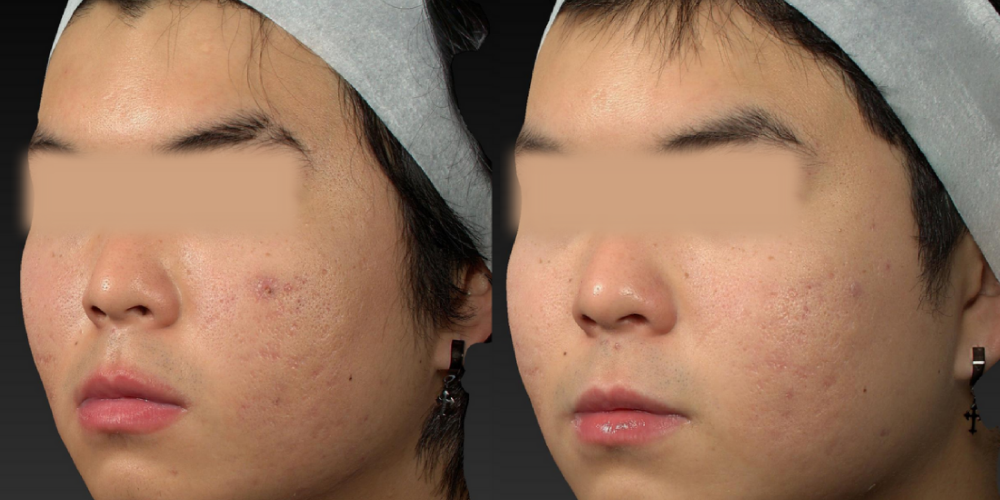
Our results speak for themselves
Unfiltered and untouched standardised 3D Vectra before & after photographs of consenting patients at Melbourne Skin & Dermatology. Individual results may vary. A thorough consultation is required before treatments.
Acne Blog Posts

Acne Fighting Treatments
For those of us that deal with acne, it can be hard to pin down a skin routine/treatment plan that is effective. There are a

Adult Acne vs. Teen Acne
While getting acne in your teens may seem like an inevitability, you will be happy to know that it is not one of life’s guarantees.

Acne 101
At some point in roughly 85% our lives, we are going to wake up and spot an unwelcome visitor on our skin in the form


