






Female Pattern Hair Loss
Female pattern hair loss (FPHL), also known as androgenic alopecia, is a non-scarring form of hair loss affecting women, primarily characterised by progressive thinning of hair across the top of the scalp and widening of the part. Unlike male pattern baldness, it rarely leads to total baldness. The condition is influenced by genetics and hormonal changes, particularly around menopause. It’s more common in postmenopausal women but can start during puberty or early adulthood, particularly in those with polycystic ovarian syndrome.
Dermatologist Led Practice
100,000+ Consultations & Treatments
Key Points
- Female pattern hair loss (FPHL), or androgenetic alopecia, is a common form of hair loss in women.
- It is characterised by thinning hair across the top of the scalp and widening of the part.
- Genetic factors and hormonal changes play significant roles.
- Progression is typically gradual.
- Treatment focuses on slowing progression and improving hair density.
What is female pattern hair loss?
Female pattern hair loss is a type of hair loss that results from a combination of genetics and hormones. It manifests as a reduction in hair density, particularly on the top of the scalp, and is often more diffuse than in male pattern baldness.
- Hair loss due to genetics and hormones.
- Reduced hair density, especially on top of the scalp.
- More diffuse than male pattern baldness.
Who gets female pattern hair loss?
FPHL is most common in postmenopausal women but can occur in women of any age after puberty. It is more common in those with polycystic ovarian syndrome (PCOS). The risk is higher for those with a family history of similar hair loss. Contact Melbourne skin clinic for dermatology services and treatments tailored to your skin care needs.
- Mostly affects postmenopausal women.
- Can occur after puberty, particularly in those with PCOS
- Family history increases risk.
Clinical features
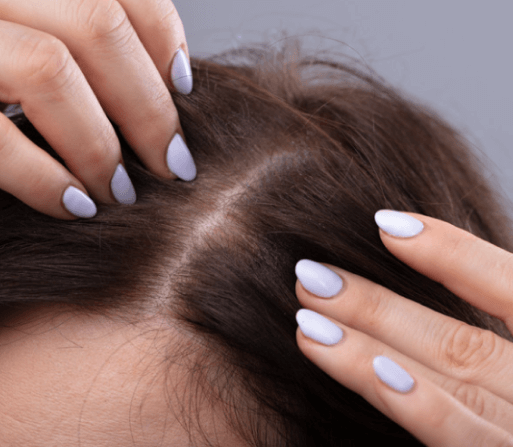
The hallmark of FPHL is a gradual thinning of hair across the top of the scalp and a widening part. Unlike male pattern baldness, women usually maintain their frontal hairline and it rarely progress to total baldness.
- Gradual thinning on top of the scalp.
- Widening of the part.
- Frontal hairline usually maintained.
- Rarely progresses to total baldness.
Diagnosis and differential diagnosis
Diagnosis is based on the characteristic pattern of hair loss. Scalp biopsy and blood tests may be used to rule out other causes of hair loss, like thyroid disorders. It’s important to differentiate FPHL from other forms of alopecia, such as telogen effluvium or alopecia areata.
- Diagnosed by pattern of hair loss.
- Scalp biopsy and blood tests for other causes.
- Differentiated from other alopecia types.
Impact and complications
FPHL can significantly impact a woman’s self-esteem and emotional well-being, given the societal emphasis on hair as a symbol of femininity. While not physically harmful, its psychological impact can be substantial.
- Significant impact on self-esteem and emotional well-being.
- No direct physical health effects, but emotional impact is considerable.
Presentation & Classification
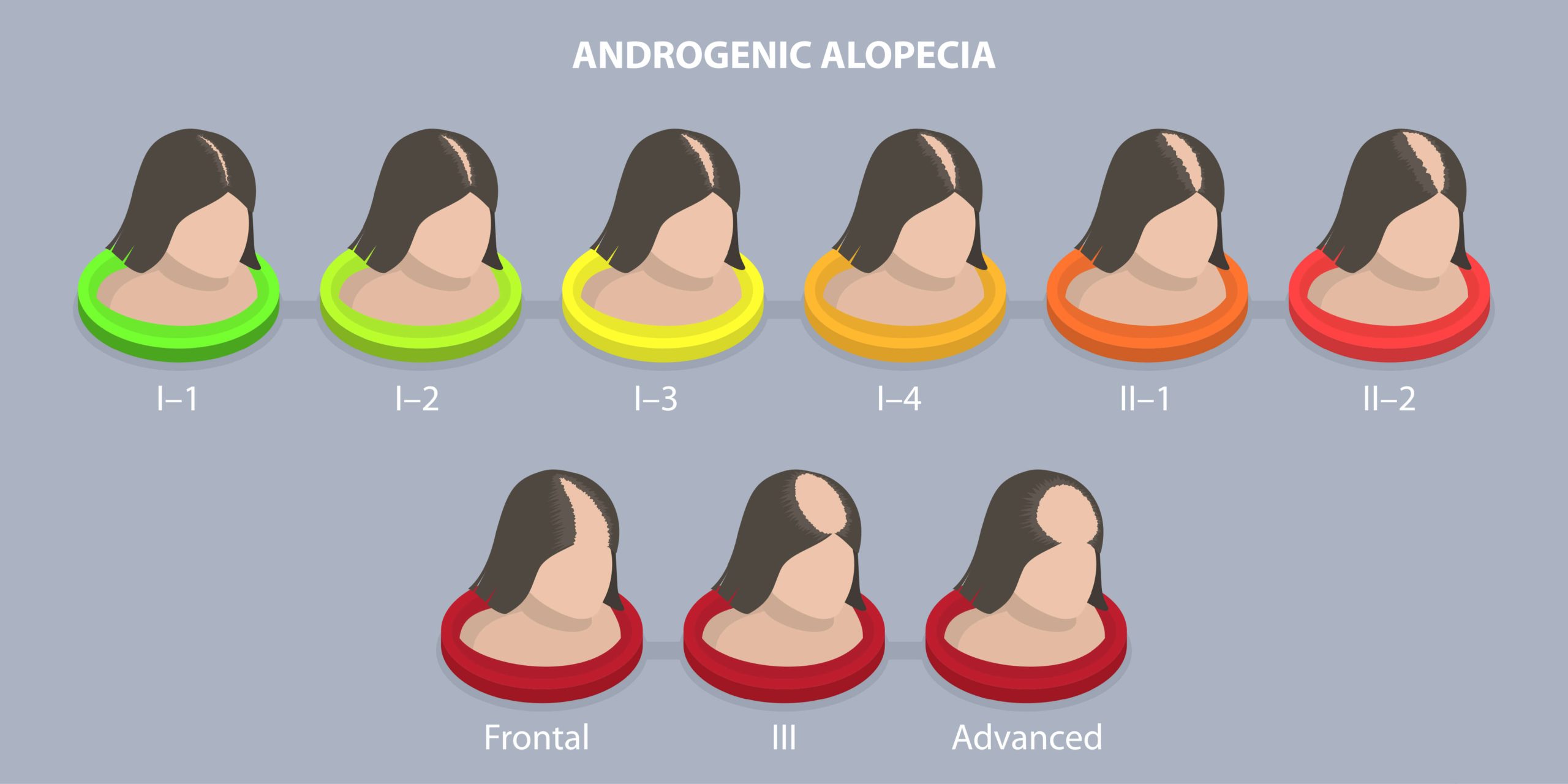
The Ludwig Classification Grades FPHL from I to III based on severity, from mild to extensive thinning. Hair loss wider at the part and narrower at the front of the scalp is referred to as the Christmas Tree Pattern.
- Ludwig Classification grades severity of thinning.
- Christmas Tree Pattern shows widening part narrowing towards the front.
Causes and triggers of female pattern hair loss
Female Pattern Hair Loss has a strong genetic component, indicating that individuals with a family history of the condition are at a higher risk of developing it. Additionally, hormonal changes, especially those that occur with polycystic ovarian syndrome and menopause can influence the onset and progression of the condition.
- Strong genetic influence.
- Hormonal changes, especially with polycystic ovarian syndrome and menopause contribute.
Treatment Options for female pattern hair loss
The treatment strategy for female pattern hair loss primarily aims to slow the progression of the condition and improve hair density. Among the topical treatments, minoxidil is widely used due to its effectiveness in stimulating hair growth. In some cases, oral treatments such as the contraceptive pill and anti-androgens are prescribed. Hair transplant surgery offers a more permanent solution for those who are suitable candidates, while PRP (platelet-rich plasma) therapy involves injections that may stimulate hair regrowth by harnessing the body’s natural healing mechanisms. Additionally, incorporating lifestyle measures like appropriate nutrition and stress management can support overall treatment efforts. However, it’s important to have realistic expectations regarding the effectiveness of these treatments. While they can help slow the progression of hair loss and improve hair density, responses may vary significantly among individuals.
- Treatments include topical and oral medications, hair transplant surgery, and PRP therapy.
- Aimed at slowing progression and improving hair density.
- Effectiveness of treatments varies.
See what our patients have to say
Blog Posts

Beyond the Dark Spot
The lesser-known faces of melanoma In the discourse on skin cancer, melanoma is often depicted by its most recognisable form; a dark, ugly-looking mole. However,

The Impact of Hyperhidrosis
Life’s worries Sweat is something that most people hardly think about. It’s just something that happens when it’s hot, when your working out, or sometimes

Why am I sweating so much?
The 101 on hyperhidrosis If you are self-conscious about how much you sweat, you could be suffering from a condition called hyperhidrosis. Many people


