






Vitiligo
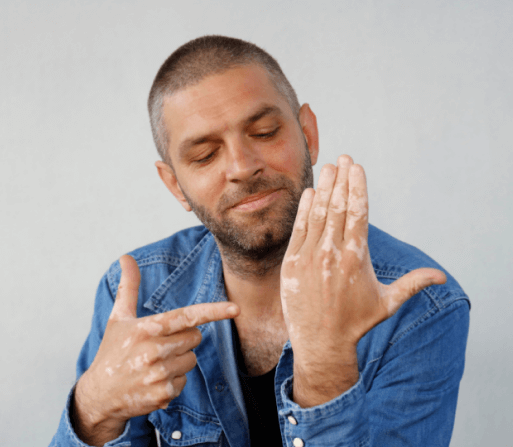
Vitiligo is a chronic condition that causes patches of skin to lose their pigment, resulting in irregular white patches of skin. It occurs when melanocytes, the cells responsible for skin pigmentation, are destroyed or stop functioning. The condition can affect people of any age, gender, or ethnicity, and is more noticeable in individuals with darker skin. While the exact cause is unknown, vitiligo is generally considered to be an autoimmune condition. The extent and rate of colour loss from vitiligo is often challenging to predict.
Dermatologist Led Practice
100,000+ Consultations & Treatments
Key Points
- Vitiligo is a long-term skin condition characterised by patches of the skin losing their pigment.
- It can affect any area of the skin, but is most visible on exposed areas, skin with folds, and near body openings such as the mouth and eyes.
- The exact cause of vitiligo is unknown, however there is an abnormal autoimmune response.
- Management includes medical treatments and lifestyle adjustments.
What is vitiligo?
Vitiligo is a skin condition where patches of skin lose their normal pigment and become white due to the loss of melanocytes. It’s not contagious or life-threatening, but it can significantly impact a person’s appearance and self-esteem.
- Loss of melanocytes leads to white patches on the skin.
- It is not contagious or life-threatening.
- It impacts appearance and self-esteem.
Who gets vitiligo?
Vitiligo can affect anyone, but it often starts before the age of 20. There’s no clear gender or racial bias, although it may be more noticeable in people with darker skin. The condition may be linked to a family history of vitiligo or other autoimmune diseases. Contact Melbourne skin clinic for dermatology services and treatments tailored to your skin care needs.
- Often begins before age 20.
- Affects all genders and races equally.
- May be linked to family history of autoimmune diseases.
Clinical features
Vitiligo is characterised by white patches on the skin that can vary in size and location. These patches are more common in areas exposed to the sun, skin folds, and near body openings. Hair growing in affected areas may also turn white.
- White patches on the skin of varying sizes.
- Common in sun-exposed areas, skin folds, and near body openings.
- Hair in affected areas may also turn white.
Diagnosis and differential diagnosis
Vitiligo is diagnosed based on the characteristic appearance of the skin. A Wood’s lamp examination and skin biopsy can confirm the diagnosis. It’s important to differentiate vitiligo from other conditions causing skin depigmentation, like chemical leukoderma and hypopigmentation disorders.
- Diagnosed by skin appearance, Wood's lamp examination, and biopsy.
- Differentiated from hypopigmenting disorders and chemical leukoderma.
Impact and complications
While vitiligo is not physically or medically harmful, it can have significant psychological and emotional impacts, especially in darker-skinned individuals. Vitiligo can be associated with other autoimmune problems such as autoimmune thyroid disorders.
- Significant psychological and emotional impact.
- Can be associated with other autoimmune problems.
Treatment Options for Vitiligo
The treatment of vitiligo focuses on restoring skin colour or uncommonly, removing remaining colour. Topical treatments involve corticosteroids, calcineurin or JAK inhibitors to restore pigment. Phototherapy uses UVB light to stimulate melanocyte function. In severe cases, depigmentation involves removing remaining pigment. Surgery, such as skin grafting, is used in small areas in stable and segmental vitiligo. Lifestyle adjustments include sun protection and the use of cosmetics to camouflage depigmented skin. The effectiveness of treatment varies, and complete repigmentation may not be possible.
- Treatment options include topical medications, phototherapy, and surgery.
- Aims at restoring skin colour or achieving even skin tone.
- Effectiveness varies and complete repigmentation may not be achievable.
See what our patients have to say
Blog Posts

Beyond the Dark Spot
The lesser-known faces of melanoma In the discourse on skin cancer, melanoma is often depicted by its most recognisable form; a dark, ugly-looking mole. However,

The Impact of Hyperhidrosis
Life’s worries Sweat is something that most people hardly think about. It’s just something that happens when it’s hot, when your working out, or sometimes

Why am I sweating so much?
The 101 on hyperhidrosis If you are self-conscious about how much you sweat, you could be suffering from a condition called hyperhidrosis. Many people


