






Rosacea
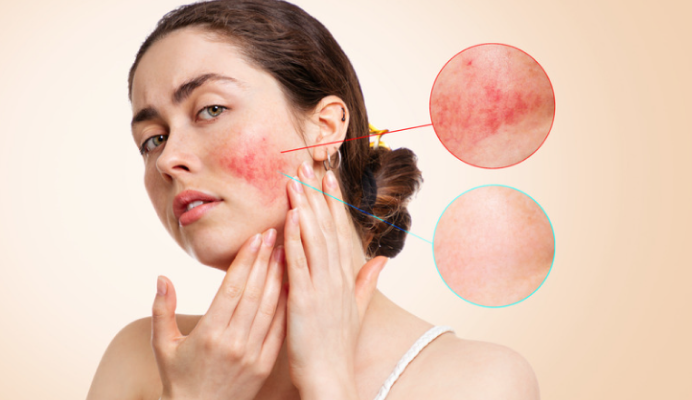
Rosacea is a chronic skin condition that causes redness and visible blood vessels on the face. It may also produce small, red, pus-filled bumps. While commonly affecting middle-aged women with fair skin, it can occur in anyone and is influenced by both genetic and environmental factors. Understanding and avoiding personal triggers, along with gentle skincare, is key in managing Rosacea.
Dermatologist-Led Practice
100,000+ Consultations & Treatments
Key Points
- Rosacea is a chronic skin condition causing redness, sometimes pimples and visible blood vessels in the face.
- Genetic factors may play a role in the development of Rosacea.
- Specific triggers include alcohol, caffeine, and other environmental factors.
- Treatment focuses on symptom management. The condition is not curable.
- Gentle skincare and topical niacinamide may be of benefit.
- Identifying and avoiding personal triggers is crucial.
What is Rosacea?
Rosacea is a chronic, inflammatory skin condition. It typically affects the central face, including the nose, cheeks, forehead, and chin. The condition is characterised by periods of flare-ups and remissions. Contact Melbourne skin clinic for dermatology services and treatments tailored to your skin care needs.
- Chronic, inflammatory skin condition.
- Affects the central face.
- Characterised by flare-ups and remissions.
Who gets Rosacea?
Rosacea is most commonly diagnosed in middle-aged women, particularly those with fair skin. However, it can affect individuals of any gender, age, or skin type.
- Most common in middle-aged women.
- Genetic predisposition.
- Fair-skinned individuals are more prone.
- Can affect all genders and skin types.
Clinical features
Rosacea’s primary features include facial redness with swollen red bumps, skin dryness, and a tendency to flush or blush more easily. In severe cases, skin thickening and enlargement, particularly of the nose (rhinophyma), can occur.
- Facial redness and swollen red bumps.
- Skin dryness and easy flushing or blushing.
- Severe cases can lead to skin thickening and rhinophyma.
Triggers of Rosacea
Triggers of Rosacea can vary widely among individuals but commonly include environmental factors like sunlight and wind, and specific foods and drinks such as alcohol and caffeine. Emotional stress and certain medications can also exacerbate symptoms.
Specific Triggers
- Alcohol and caffeine known to trigger flare-ups.
- Sunlight, wind, and extreme temperatures also common triggers.
Genetic and Molecular Causes
While the exact cause of Rosacea remains unknown, genetic factors are believed to play a role. Molecularly, abnormalities in cathelicidin (an antimicrobial peptide) and problems with vasomotor vascular control are thought to contribute to the inflammation and redness seen in Rosacea.
- Genetic predisposition may contribute.
- Abnormal cathelicidin production and vasomotor issues implicated.
Skincare for Rosacea
Proper skincare is crucial in managing Rosacea. Gentle skincare helps to reduce irritation and flare-ups. Topical niacinamide is beneficial due to its anti-inflammatory properties, which can help soothe redness and improve skin barrier function.
Benefits of Topical Niacinamide
- Reduces inflammation and redness.
- Improves skin barrier function.
- Helps in managing Rosacea symptoms.
Diagnosis and differential diagnosis
Diagnosis of Rosacea is typically based on the pattern of redness and the presence of other symptoms. It’s important to differentiate it from other skin conditions like acne, eczema, and lupus.
- Diagnosed based on redness pattern and symptoms.
- Differentiate from acne, eczema, and lupus.
Impact and complications
Rosacea can have a significant psychological impact, causing embarrassment or frustration. Eye problems, like dryness and irritation, can also occur, and in severe cases, vision can be affected.
- Psychological impact due to visible symptoms.
- Potential for eye problems and vision impact.
Subtypes and variants
Rosacea has four subtypes. Erythematotelangiectatic, Papulopustular, Phymatous, and Ocular. Each subtype has distinct characteristics and may require different management approaches.
- Erythematotelangiectatic - Redness and visible blood vessels.
- Papulopustular - Redness with acne-like breakouts.
- Phymatous - Skin thickening and irregular surface.
- Ocular - Affects the eyes, causing dryness and irritation.
Rosacea in Social Media and Popular Press
Rosacea is often discussed in media in the context of cosmetic concerns and the importance of identifying personal triggers. It is sometimes mistakenly associated with poor hygiene or alcohol consumption, leading to misconceptions about the condition.
- Often associated with cosmetic concerns.
- Importance of identifying personal triggers highlighted.
- Misconceptions about hygiene and alcohol consumption.
Treatment Options for Rosacea
Treatment for Rosacea focuses on managing symptoms and avoiding triggers. Options include topical treatments, oral antibiotics, judicious use of topical and oral retinoids and laser therapy. Identifying and avoiding individual triggers is crucial for long-term management.
Lifestyle Measures
Lifestyle adaptations, including sun protection and avoiding known triggers (like spicy foods, alcohol, and extreme temperatures), are key to managing Rosacea.
Topical Treatments
Topical medications, such as metronidazole, azelaic acid, and ivermectin, are commonly used to reduce redness and the number of acne-like lesions.
Oral Treatments
For moderate to severe cases, oral antibiotics like doxycycline may be used. These help reduce inflammation and clear up bumps and pimples.
Physical Treatments
Laser and light therapies can help reduce redness and visible blood vessels. Dermatological procedures such as ablative laser might be necessary for rhinophyma.
Things to Avoid
Avoiding personal triggers is key. This includes specific foods, extreme temperatures, harsh skincare products, and certain medications that can exacerbate symptoms.
Expectations and Outcomes
Rosacea is a chronic condition requiring ongoing management. While there is no cure, symptoms can often be controlled or significantly reduced with appropriate treatment and lifestyle adjustments.
- Chronic condition requiring ongoing management.
- Treatment focuses on symptom control.
- Lasers can help with redness.
- Lifestyle adjustments and avoiding triggers are crucial.
- No cure, but many find symptom relief with treatment.
Our results speak for themselves
Unfiltered and untouched standardised 3D Vectra before & after photographs of consenting patients at Melbourne Skin & Dermatology. Individual results may vary. A thorough consultation is required before treatments.
Rosacea Blog Posts

Oral and topical niacinamide for rosacea
Rosacea can be a challenging condition to live with. The unpredictable flushing, uncomfortable dryness, random pimples, and the frustrating sensitivity of the skin would make

Vascular Laser Therapy for Rosacea
Some sufferers of rosacea may have agonised in front of the mirror about the diffuse redness and prominent blood vessels on their face. Thankfully, advances

Winter Tips for Rosacea Patients
Rosacea patients are well-aware that the heat is their enemy. Staying out of the hot gaze of the sun and keeping cool with shade and


