












Ellacor Microcoring
Microcoring is a minimally invasive procedure that uses small hollow needles to remove microscopic columns of skin in a controlled manner. As a Key Opinion Leader (KOL) for Ellacor, Dr Chris Jalilian and his team use the Ellacor system at Melbourne Skin & Dermatology to address skin laxity of the face and all body areas.

Dermatologist Led Practice


100,000+ Consultations & Treatments
Key points
Physical skin removal
Ellacor microcoring physically removes microscopic columns of skin rather than heating the tissue.
Different from other treatments
Selected wrinkles and laxity
It may be considered for selected facial wrinkles and laxity after medical assessment.
Visible recovery
Redness, swelling, bruising, bleeding, crusting and visible treatment marks can occur during recovery.
Not a facelift
Results vary and Ellacor microcoring is not a replacement for a facelift or surgical skin excision.
What is microcoring
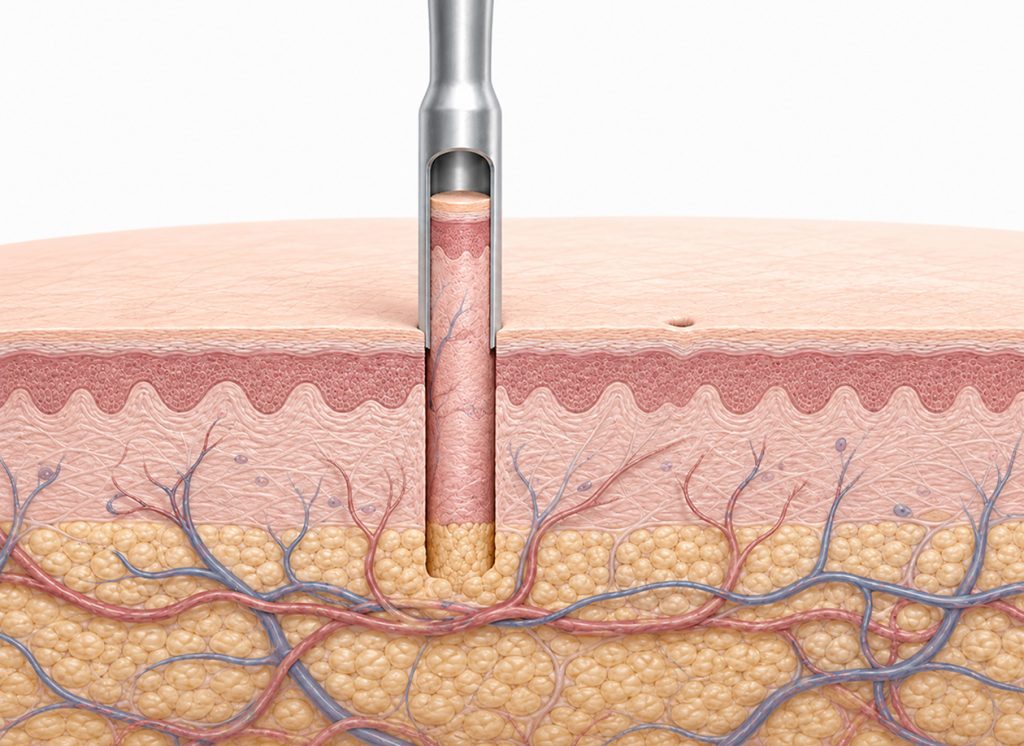
Microcoring creates a pattern of very small full thickness skin cores using hollow needles. Each core removes a minute amount of tissue. The surrounding skin then closes and heals through the body’s normal wound repair process.
Because microcoring does not rely on heat, it creates a different type of controlled injury from laser resurfacing or radiofrequency treatment.
It should not be confused with conventional microneedling, which creates narrow puncture channels but does not intentionally remove columns of skin.
How Ellacor works
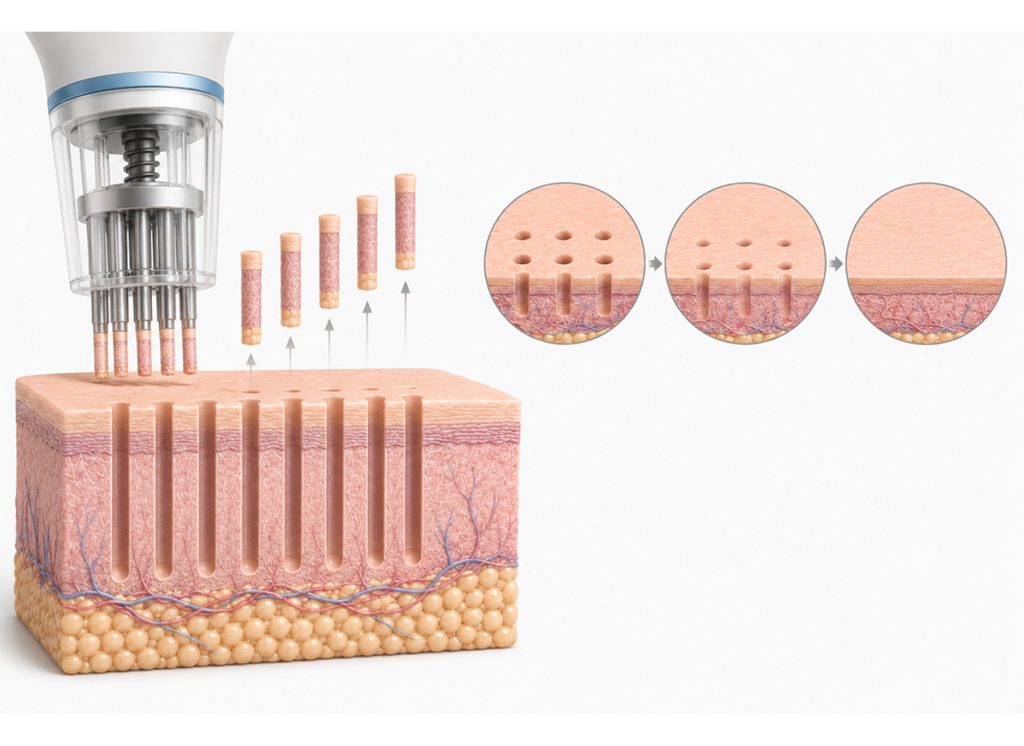
The Ellacor handpiece places hollow needles into the skin at a programmed depth and spacing. The removed microcores are collected by the device. The clinician adjusts the treatment pattern according to the area, skin characteristics and protocol.
The treatment aims to improve selected wrinkles and laxity by removing a controlled proportion of skin over a larger treatment field.
It does not excise a continuous strip of skin and it does not reposition deeper facial tissues.
Concerns and areas that may be considered
The treatment aims to improve selected wrinkles and laxity by removing a controlled proportion of skin over a larger treatment field. It does not excise a continuous strip of skin and it does not reposition deeper facial tissues.
The Ellacor handpiece places hollow needles into the skin at a programmed depth and spacing. The removed microcores are collected by the device. The clinician adjusts the treatment pattern according to the area, skin characteristics and protocol.
How Ellacor microcoring differs from other treatments
Microneedling
Creates puncture channels to stimulate a healing response but does not intentionally remove skin cores.
Radiofrequency microneedling
Combines needles with thermal radiofrequency energy at selected depths.
Laser resurfacing
Uses light based energy to remove or heat microscopic zones of the skin.
Subdermal radiofrequency
Places a cannula beneath the skin to deliver energy within the subdermal plane.
Facelift or surgical excision
Removes and repositions a larger continuous amount of tissue and can address
more advanced skin excess or deeper descent.
Consultation and suitability
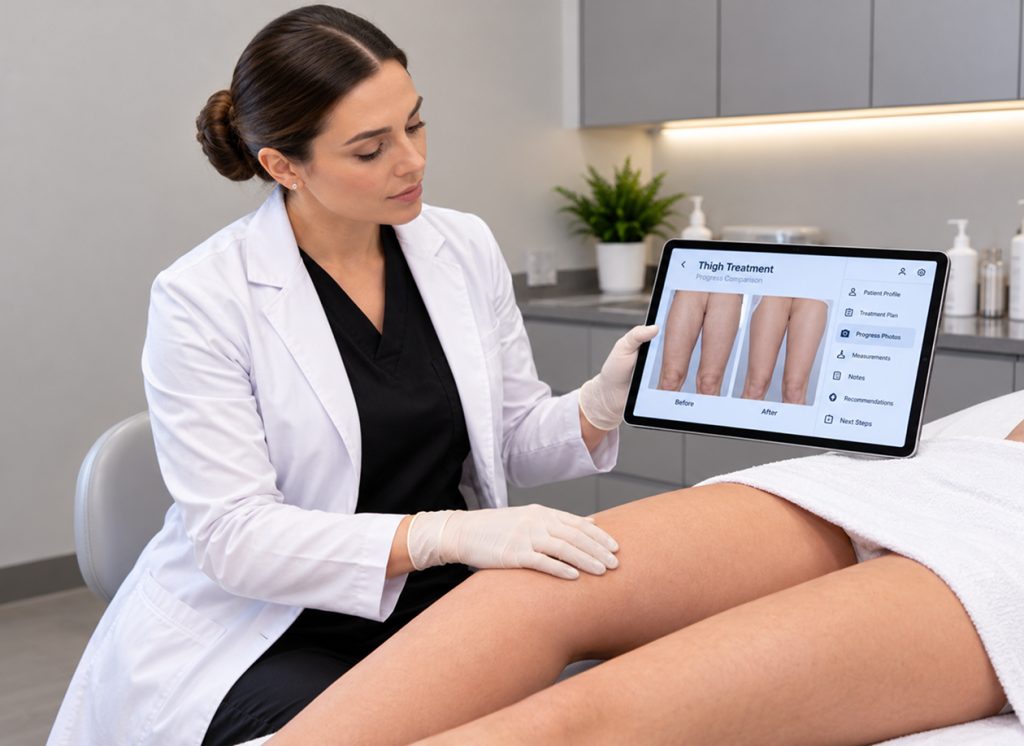
An Ellacor microcoring consultation assesses the pattern of wrinkles and laxity, skin thickness, pigmentation tendency, scarring history, medical conditions, medications, previous procedures and the patient’s ability to follow aftercare. The clinician also considers whether the concern is primarily caused by skin excess or by fat, volume loss or deeper tissue descent.
Ellacor microcoring may not be suitable for some skin types, areas, medical conditions or healing profiles. A history of keloid scarring, active skin disease or infection, impaired wound healing and some implanted materials may affect suitability. The final contraindications must follow the current device instructions and clinical assessment.
What happens during treatment
Preparation
The skin is cleansed and local anaesthesia is used to reduce procedural discomfort.

Treatment mapping
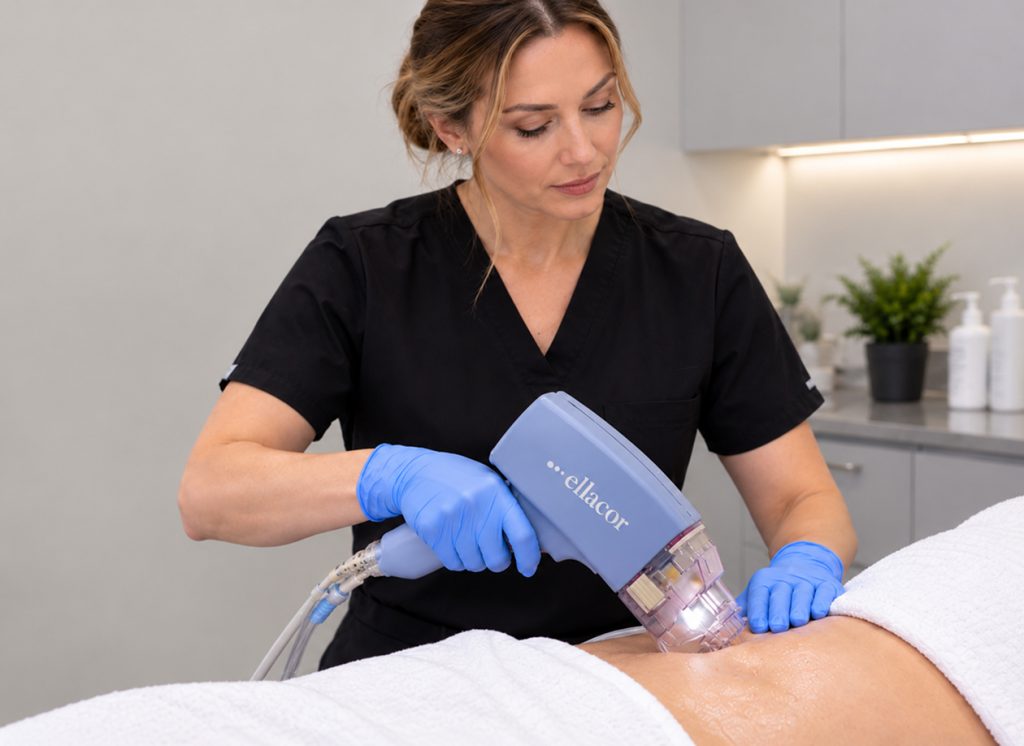
The treatment area is mapped and the Ellacor handpiece is applied in a planned pattern.

Ellacor microcoring
Small amounts of bleeding are expected because tissue is physically removed.



Treatment time
The treatment time depends on the area and protocol.

After treatment
The area is cleaned and aftercare is applied.

Recovery guidance
Patients receive instructions about wound care, cleansing, sun protection, activity and signs that require medical review.
Recovery and aftercare
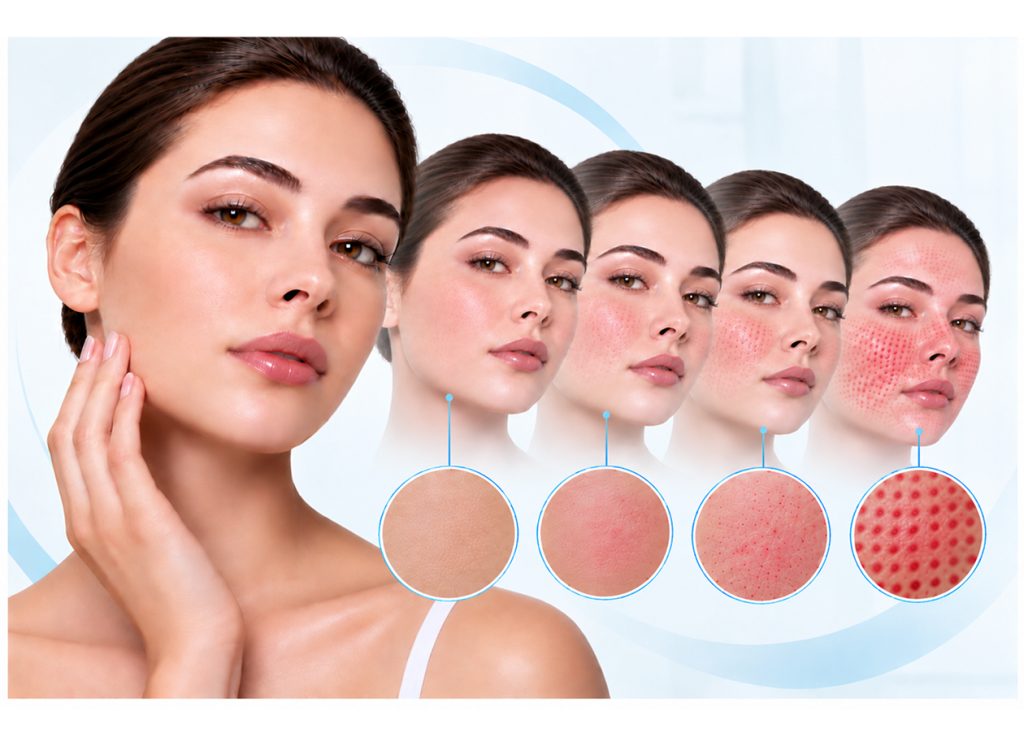
Ellacor microcoring has a visible recovery period. Common early effects can include redness, swelling, bruising, bleeding, tenderness, burning, dryness, tightness, crusting, peeling and grid like treatment marks. The appearance and duration vary between individuals and may be more noticeable than expected from the size of each individual core.
Patients should plan for social downtime of 3 days and should not assume that they will be presentation ready after 4 days. Makeup, skincare, exercise, heat exposure and sun exposure need to be restricted during early healing. Exact instructions are provided at your consultation.
Results and limitations
Changes develop as the treatment field heals and remodels. The degree of improvement varies with the starting concern, skin quality, treatment density, healing response and number of treatments. Some patients may be advised to consider more than one treatment session. The treatment can be combined with other selected laser and energy treatments.
Ellacor microcoring cannot stop ageing and it does not recreate the tissue removal or repositioning of surgery. Residual wrinkles, laxity, asymmetry or texture change should be expected.

Risks and complications
Material risks include prolonged redness, swelling, bruising, bleeding, pain, infection, delayed healing, pigment darkening or lightening, persistent treatment marks, texture irregularity, scarring, asymmetry, skin injury, an unsatisfactory result and the need for further treatment. Local anaesthesia also has risks, including allergic or toxic reactions.
Although promotional material may refer to treatment without visible scarring, scarring remains a possible complication of any procedure that removes full thickness skin. Risk can be influenced by treatment depth, density, area, skin characteristics, aftercare and individual healing.
Alternatives
Alternatives may include no treatment, skin care, laser resurfacing, radiofrequency microneedling, subdermal radiofrequency, radiofrequency assisted contouring or surgical assessment. These options act at different tissue levels and have different recovery and risk profiles.
No treatment
Skin care
Laser resurfacing
Radiofrequency microneedling
Subdermal radiofrequency
Radiofrequency assisted contouring
Surgical assessment
Frequently asked questions
People often use the term loose skin to describe several different concerns. Distinguishing them is important because the treatments are not interchangeable
No. Microneedling creates narrow channels but leaves the tissue in place. Ellacor microcoring uses hollow needles to remove microscopic columns of skin.
Ellacor microcoring can improve wrinkles and laxity but it does not reposition deeper tissues or remove a continuous amount of excess skin.
No, microcoring, unlike radiofrequency microneedling or CO2 laser does not induce heat damage to the skin.
Recovery varies. Swelling, redness, bruising, crusting and visible treatment marks may persist beyond the first few days. The clinician will discuss the expected range based on the area and protocol.
Some patients may be considered for a series while others may not require or be suitable for further treatment. The decision is based on response, recovery and goals.
Suitability depends on the current Australian device instructions, the treatment area, pigmentation risk and individual assessment.
Is Ellacor Microcoring Right for You?
Ellacor microcoring involves physical removal of microscopic skin cores to tighten skin. Request a consultation to determine whether it is suitable for your concern.
See what our patients have to say
Consultation Fee
An individual price will be determined at your consultation accordingly to your needs